


Ju Hyung Kim
Download PDF
Mar 5 2026
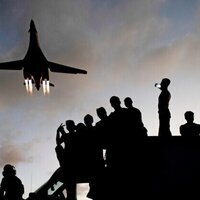
mobilinchen/DepositphotosWhen Richard Nixon entered the White House in 1969, the US was strategically overextended and politically constrained. The Vietnam War was deadlocked, domestic riots intensified, and credibility in the US appeared strained. Alongside his national security advisor, Henry Kissinger, Nixon attempted to shift the psychological landscape of the conflict. The so-calledmadman theorywas the deliberate cultivation of perceived unpredictability, instead of genuine irrationality. The objective was to convince adversariesparticularly the Sovietsthat Nixon could escalate to extreme measures, including nuclear use, if overtly provoked. The strategic logic was based upon the calculation that the Soviets would pressure the North Vietnamese to compromise if Moscow believed that Nixon was frivolous enough to escalate. The most vivid case of this approach wasOperation Giant Lancein October 1969. At the time, nuclear-armed B-52 bombers were placed on high-alert patrols near Soviet airspace for three consecutive days, which were purposefully designed to be detectable. By intensifying bombing operations both in Vietnam andCambodia, the US strengthened the impression that the escalation threshold was uncertain.
With many decades having now passed from the above events, the historical evaluation is still ambiguous. Although it is true that the Soviet leadership took note of the US signal, the evidence that the Soviets fundamentally altered their strategy out of fear of Nixons instability is somewhat limited. Americas domestic constraints also weakened the credibility of an extreme threat. The adversaries fully understood that US public opinion radically limited escalation options. Eventually, the 1973Paris Peace Accordreflected more of attrition and diplomatic maneuvering, rather than successful coercive unpredictability. Therefore, the lesson is twofold. Strategic ambiguity could compound the complexity of the opponents calculations, yet performed irrationality also does not guarantee concession. Its effectiveness depends on a series of elements including comprehensive balance of power, alliance cohesion, and the opponents perception of credibility.
Todays Northeast Asia presents a more complex and nuclearized environment compared to 1969 Vietnam. This region is facing an increasing possibility of adual contingencyChina initiating military operations against Taiwan and North Korea conducting militarily provocative activities simultaneously. North Koreas expanding missile capability, which could carry nuclear warheads to Japan, South Korea, andeven the United States, isdeepening concerns about nuclear decouplingNortheast Asia. Meanwhile,Chinas modernization of its nuclear triadhas reinforced the reliability of its second-strike capability.
If Donald Trumps personal attributescharacterized by rhetorical volatility and transactional signalingcontinue, the question becomes whether such unpredictability could be strategically harnessed rather than merely endured. Under specific conditions, a modernized madman approach may have limited yet practical deterrence value in Northeast Asia.
Unpredictability could strengthen deterrence if it increases the opponents threat perception without weakening alliance cohesion. In a Taiwan contingency scenario, if Beijing believes that the US threshold for reaction is uncertain and escalation could rapidly move beyond limited conventional conflict, China could hesitate before commencing a fait accompli operation.Chinas leadership is sensitive to regime survival and economic stability. Introducing uncertainty regarding Americas escalation dynamics could complicate Chinas operational timetable and raise the perceived cost of aggression.
Meanwhile, a calibrated version of unpredictability against North Korea could disruptPyongyangs habitual brinkmanship tactics. Historically, the North Korean regime relied on negotiated de-escalation that followed incremental escalation. If it is convinced that escalation could trigger disproportionate and unpredictable US retaliation, Pyongyangs risk calculus could changeparticularly in a situation in which distraction of attention during a Taiwan contingency could be perceived as an opportunity. Nonetheless, such effectiveness depends on five stringent conditions.
The first condition is institutional anchoring. Unpredictability should be coupled with visible institutional consistency. Despite the Presidents rhetoric remaining volatile, the US military posture, alliance consultation mechanisms, and nuclear command-and-control structure should be regulated and shown to be credible. Adversaries should perceive that escalation is possible, not that chaos is inevitable. If unpredictability signals loss of control instead of controlled ambiguity, deterrence would crumble.
The second condition is credible dual-theater capability. A madman strategy works only when the opponent believes that escalation is implementable. In a dual contingency scenario, Washington should visibly display its ability to conduct simultaneous operations both in the Taiwan strait and on the Korean Peninsula. This includes distributed force posture, logistics resilience, missile defense integration, and reserve mobilization planning. Without material capacity, unpredictability would turn into hollow signaling.
The third condition is alliance reassurance. Japan and South Korea should be convinced that unpredictability serves strategic purposes rather than reflecting abandonment risk. Reinforced nuclear consultation mechanisms, trilateral institutionalization that goes beyond the 2023Camp David summit, and an integrated missile defense systemat leastan alignment between Japans enemy base strike capability and South Koreas three axis systemare necessities in order to prevent anxiety about nuclear decoupling. If US regional allies interpret unpredictability as unreliability, domestic nuclear disputes would intensify, ultimately weakening deterrence from within.
The fourth condition is an escalation control channel with China. Strategic unpredictability should be offset by robust crisis communication mechanisms. Military hotlines, collision prevention agreements, and structured diplomatic engagement reduce the danger that signaling will spiral into an unintended war. The effectiveness of the madman strategy depends on the opponents belief that escalation is possiblebut not inevitable. Therefore, it is a sine qua non to preserve a path for exit.
The fifth condition is economic resilience. Despite their mutual effort for a decoupling,US and China are deeply economically intertwined. If unpredictability triggers panic in the market, domestic political cost would weaken US strategic resolve. An effective madman approach requires domestic economic stability that can absorb volatilityan alternative is tocreate an economic article 5 on collective economic deterrence against Chinas weaponization of tradeand does not impair credibility.
Under these conditions, a limited and structured form of unpredictability could strengthen deterrence by complicating the adversarys calculation. This introduces an element of uncertainty into Beijings timetable for invasion, while disrupting Pyongyangs opportunistic escalation logic in a dual contingency environment. The room for error is narrow. Chinas stable second-strike capability and North Koreas entrenched nuclear posture indicate that excessive volatility risks triggering preemptive calculations rather than restraint. In a multipolar nuclear environment, misjudgment could lead to rapid escalation. Furthermore, a reasonable doubt that US military assets would be thinned out in a dual contingencymeaning the two theaters would not be able to be equally defendedwould leave smaller window of opportunity for the madman strategy to be applicable.
Ultimately, the effectiveness of a madman strategy in Northeast Asia would depend more on structure rather than Trumps personality. If Trumps rhetorical unpredictability is embedded within a reliable force posture, alliance cohesion, regulated escalation control, and institutional consultation, deterrence could be strengthened, to some extent, by increasing the uncertainty of the US threshold. If left unanchored, however, it could deepen concerns about nuclear decoupling, accelerate an arms race, and increase the probability of misjudgment in a dual contingency scenario that the region seeks to avoid.
Nixons experiment showcased that perceived irrationality alone could not coerce strategic submission. In contemporary Northeast Asia, performed unpredictability could function as an auxiliary means of deterrence only when it is buttressed by material capacity, institutional credibility, and alliance cohesion. Under the shadow of a dual contingency across the Taiwan Strait and the Korean Peninsula, regulated ambiguitynot uncontrolled volatilityremains a critical demarcation line that divides deterrence and catastrophe.
Further Reading on E-International Relations
- Should There Be a New Grouping for the Non-Nuclear Five of South Asia?
- Ignore the Paradox: Russia, Ukraine, and Nuclear Deterrence
- Opinion The US Doesnt Need More Nuclear Weapons
- Opinion From Linkage to East Asia: From the 1970s to Todays US-Japan-ROK Strategy
- Opinion With the Rise of the Indo-Pacific, Has the Asia-Pacific Faded Away?
- Opinion Chinas New Cold War Posturing
About The Author(s)
Dr. Ju Hyung Kim currently serves as a President at the Security Management Institute, a defense think tank affiliated with the South Korean National Assembly. He has been involved in numerous defense projects and has provided consultation to several key organizations, including the Republic of Korea Joint Chiefs of Staff, the Defense Acquisition Program Administration, the Ministry of National Defense, the Korea Institute for Defense Analysis, the Agency for Defense Development, and the Korea Research Institute for Defense Technology Planning and Advancement. He holds a doctoral degree in international relations from the National Graduate Institute for Policy Studies (GRIPS) in Japan, a masters degree in conflict management from the Johns Hopkins University School of Advanced International Studies (SAIS), and a degree in public policy from Seoul National Universitys Graduate School of Public Administration (GSPA).
TagsAsiaNuclear DeterrenceRichard Nixon