


The fragile ceasefire between the United States and Iran may have eased fears of a wider regional war, but persistent instability around the Strait of Hormuz continues to disrupt global trade, drive up energy costs and fuel a growing jobs and cost-of-living crisis.
The clock is ticking for global food systems as disruptions in the Strait of Hormuz threaten to choke off the flow of fuel and crucial fertilizers needed for the next planting season also raising the risk of higher food prices and a new wave of inflation.
A temporary ceasefire between the United States and Iran has been extended, offering an opening for diplomacy but persistent tensions in the Strait of Hormuz are compounding trade disruptions and intensifying pressure on humanitarian operations and vulnerable communities far beyond the Gulf.
The fallout is being felt far beyond the Middle East, with UN agencies warning that rising fuel prices, disrupted shipping routes and growing financial uncertainty are placing mounting pressure on economies, labour markets and vulnerable households across Asia and other developing regions.
Before the latest tensions, the Strait of Hormuz handled roughly one-fifth of global oil supplies around 20 million barrels a day alongside vast quantities of liquefied natural gas (LNG) and raw materials for critical industries, making it one of the worlds most important maritime chokepoints.
Ship traffic over the past weekfluctuated between just two and 16 vessels per day far below the more than 100 ships that typically transited daily before the crisis.
NASA/GSFC/Jacques Descloitres
The Strait of Hormuz is a narrow but vital shipping route linking the Persian Gulf to the Gulf of Oman and the wider Arabian Sea. It lies between Iran to the north and Oman and UAE to the south.
Global growth and trade stalling
The sharp decline has pushed oil and gas prices higher, disrupted supply chains and increased transport and insurance costs worldwide, with markets reacting nervously to the daily uncertainty.
Global growth is now projected to slow to 2.5 per cent in 2026 well below pre-pandemic levels, according to a report released on Tuesday by economists atUNCTAD, the UN trade and development body.
Global trade growth is also expected to weaken sharply after a strong performance last year.
Inflation rising across Asia
Theeconomic outlook for Asia has deteriorated rapidly since the crisis escalated, driving inflation and weakening consumer confidence in several countries,accordingto the UN regional economic commission,ESCAP.
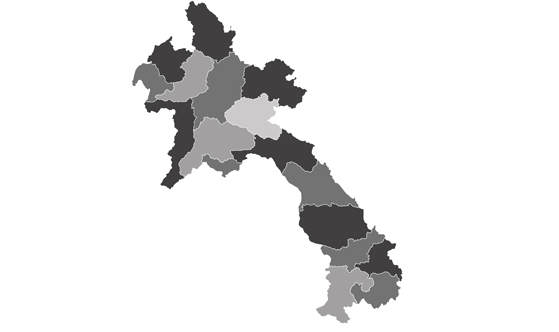
In Lao Peoples Democratic Republic, headline inflation which measures overall consumer prices rose from 6.2 per cent in February to more than 10 per cent in April. Pakistan also saw inflation jump from 7.3 per cent in March to 10.9 per cent in April.
East Asia the regions economic engine is also expected to slow, with growth projected to ease from 5.0 per cent in 2025 to 4.4 per cent in 2026 as higher energy costs and trade uncertainty cloud the outlook.
WFP/Htet Oo Linn
Families in Myanmar have been hit hard by rising prices, with the most vulnerable struggling to meet their daily needs.
Currencies weakening
Several regional currencies have weakened against the US dollar while borrowing costs have risen as investors reassess risks.
In Nepal, for instance, one US dollar traded at around 154.5 rupees on Tuesday nearly 10 rupees higher than in early February sharply increasing import costs in the heavily import-dependent economy.
ESCAP warned that many developing countries hold fuel reserves covering less than three months of imports, raising the risk of deeper supply pressures if instability persists.
It also cautioned thata prolonged crisis could trigger economic disruptions comparable to the 1973 oil shock, including recession risks and double-digit inflation in vulnerable economies.
Myanmar families struggling
The impact is already visible in countries facing existing humanitarian and economic crises.
In Myanmar, where conflict and displacement have already devastated livelihoods, fuel prices have tripled nationwide since late February and the cost of a basic food basket has skyrocketed.
One in four people in Myanmar are acutely food insecure,the UN World Food Programmesays, warning that rising fuel and fertilizer prices are threatening both household survival and the upcoming monsoon planting season.
spoke to Michael Dunford, the agencys Country Director in Myanmar, about the impact on vulnerable communities. Listen to the interview here.
Labour markets under strain
The International Labour Organization (ILO)warnedthat the crisis was increasingly affecting jobs, wages and working conditions worldwide through higher energy costs, weaker tourism, disrupted migration and slowing trade.
Beyond its human toll, the Middle East crisis is not a short-lived disruption,said Sangheon Lee, Chief Economist at the UN agency.It is a slow-moving and potentially long-lasting shock that will gradually reshape labour markets.
Under one scenario modelled by the agency in which oil prices remain around 50 per cent above their early 2026 average global working hours could fall by 0.5 per cent this year and 1.1 per cent in 2027, equivalent to roughly 14 million and 38 million full-time jobs respectively.
Livelihoods at stake
Real labour incomes could decline by as much as $3 trillion globally by 2027, the ILO estimated, with Asia-Pacific and Arab states among the regions most exposed because of their dependence on Gulf energy flows, shipping routes and labour migration.
The agency also warned that labour deployments to Gulf countries had already declined sharply in several labour-sending economies, while remittance flows a vital source of income for millions of families are weakening.
If the crisis disrupts both deployments and remittance flows,the effects could spread to consumption, poverty and local employment in countries of origin,ILO warned.
ESCAPnotesthat the crisis has exposed a broader lesson for an increasingly volatile world economy:countries that invest in resilience and prepare for energy and supply shocks are better positioned to withstand future shockswhatever the drivers.